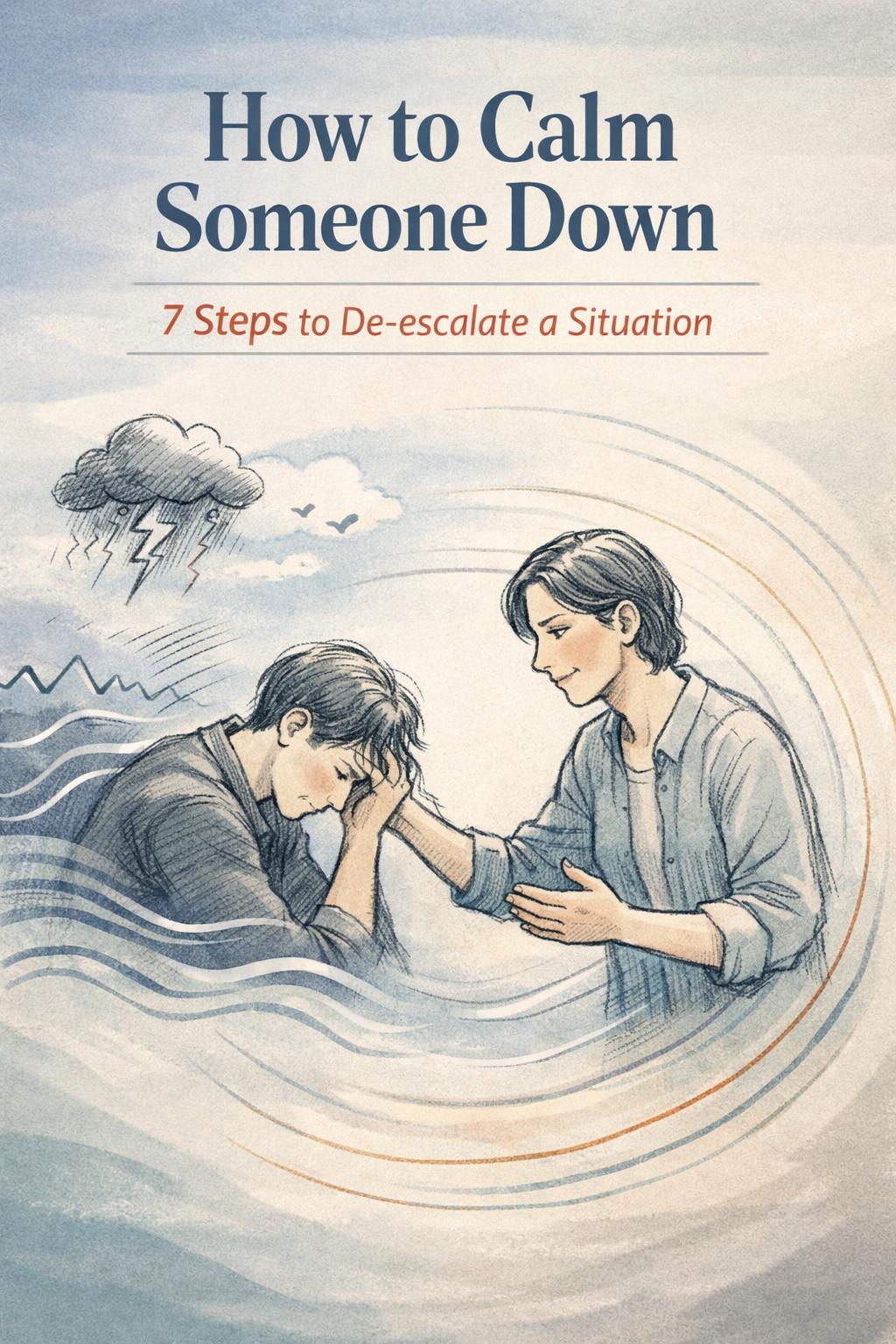
7 Steps to De-escalate a Situation Leave a comment
When someone gets upset or angry, knowing how to respond can make a big difference. The way you handle these moments affects whether the situation gets better or worse. Learning to calm someone down is a skill that helps at home, at work, and in everyday life.
Understanding how to de-escalate tense situations gives you practical tools to help someone move from anger or distress back to calm. This involves using your voice, body language, and words in specific ways. It also means recognizing what triggers strong emotions and how to build trust when conversations get hard.
The techniques for de-escalating an argument are not complicated, but they do require practice. You’ll learn how to use your tone, give people space, and respond in ways that actually help instead of making things worse.
1) Start with a calm, steady tone and low volume
Your voice sets the tone for the entire interaction. When someone is upset or angry, speaking in a calm and steady way helps create a safer space for them to express their feelings.
Tone control is one of the most important strategies when trying to calm someone down. Your tone can actually speak louder than the words you choose.
Keep your volume low and speak slowly. This sends a signal that you’re not a threat and that you’re willing to listen.
When you raise your voice or speak quickly, it can make the other person feel more defensive. They might think you’re attacking them or that you don’t care about their concerns.
A steady tone helps your body settle, which naturally makes the other person feel less on edge. People tend to mirror the energy you bring to a conversation.
Think of your voice as a tool to create calm rather than add to the tension. Even if you feel frustrated or anxious inside, working to keep your voice level makes a real difference.
Your calm voice shows respect for the other person’s feelings. It tells them you’re taking their concerns seriously without adding fuel to the fire.
Practice slowing down your speech and lowering your volume when things start to feel tense. This small change in how you communicate can help defuse tension before it grows into something bigger.
2) Use the person’s name and make brief eye contact
Using someone’s name during a tense moment helps create a personal connection. It reminds the person that you see them as an individual, not just a problem to solve. When you say their name calmly, it can grab their attention in a gentle way.
Eye contact shows that you’re paying attention and care about what they’re experiencing. However, you need to be careful not to stare too intensely. Making eye contact during de-escalation should be natural and respectful, not confrontational.
Keep your gaze steady but soft. Look at the person directly without staring them down for long periods. This balance helps build trust without making them feel threatened.
Try saying something like “Sarah, I can see you’re upset” or “John, let’s talk about this.” The combination of their name and calm eye contact works together to bring down tension. It signals that you’re there to listen and help, not to judge or argue.
If the person looks away, don’t force eye contact. Some people need to break eye contact when they’re overwhelmed, and that’s okay. Just stay present and focused on them even if they’re not looking directly at you.
3) Offer space: step back and reduce physical proximity
When someone is upset or angry, they need room to breathe. Moving back a few steps shows you’re not a threat and gives them the physical space they need to feel safer.
Standing too close can make an angry person feel trapped or cornered. This often makes their emotions stronger instead of calmer. Creating physical space is one of the key ways to prevent conflict from getting worse.
You should take a step or two backward if you notice someone getting more upset. Keep a comfortable distance between you and them. This might be about an arm’s length away or even more if the situation feels tense.
Your body position matters too. Don’t block doorways or exits because this can make someone feel trapped. Stand at an angle instead of directly facing them, which feels less confrontational.
Watch how the person responds to the space you give them. If they seem to relax a bit, you’re doing the right thing. Some people need more room than others when they’re dealing with strong emotions.
Remember that space isn’t just about distance. It also means not crowding them with too many people around. If others are nearby, ask them to step back too.
You can offer space while still being present and ready to help. You don’t have to leave the room completely unless the person asks you to. Just stay at a distance where they feel comfortable and you stay safe.
4) Validate feelings: say “I can see you’re upset”
When someone is angry or distressed, they need to feel heard. Acknowledging their emotions can stop a situation from getting worse.
You can say simple phrases like “I can see you’re upset” or “It sounds like this matters a great deal to you.” These words show respect for what the other person is feeling.
Validation is different from agreement. You don’t have to think the person is right to recognize their emotions. You’re simply showing that you notice how they feel.
This approach works because it validates their feelings without escalating the situation. The person feels less alone with their emotions. They often calm down when they know someone understands their distress.
You might also try phrases like “I want to understand what’s going on so we can help you.” This shows you care about finding a solution. It moves the conversation forward in a positive way.
Avoid telling someone to calm down or that they’re wrong. These responses usually make people more upset. Instead, phrases that respect the other person’s feelings help create a safer space for talking.
The goal is to make the person feel seen and heard. When you validate their emotions, you build a bridge instead of a wall. This small step can make a big difference in how the conversation goes.
5) Ask closed questions to assess needs (e.g., “Are you hurt?”)
When someone is upset, closed questions help you quickly understand their immediate needs. These questions require simple yes or no answers, which makes them easier to respond to when someone is stressed or overwhelmed.
Start by asking basic questions like “Are you hurt?” to check if the person needs physical help. This shows you care about their safety first. If they say yes, you can focus on getting them medical attention or treating minor injuries.
You can also ask questions like “Do you need water?” or “Are you in pain?” These simple questions help you figure out what the person needs right away. They work better than open-ended questions because upset people often struggle to explain complex feelings or situations.
When approaching someone who appears distressed, questions that position you as a helpful ally work best. Keep your tone calm and friendly. This helps the person feel supported rather than interrogated.
Avoid asking too many questions at once. Give the person time to answer each question before moving to the next one. This prevents them from feeling overwhelmed or pressured.
Watch their body language as they answer. Sometimes people say they’re fine when they’re not. If their words don’t match their actions, gently offer specific help like “Can I get you a chair?” or “Would you like me to call someone?”
Closed questions work especially well in the early stages of calming someone down. They help you gather important information without requiring the person to tell a long story. Once they feel calmer, you can switch to more open questions if needed.
6) Set a clear, simple boundary with an alternative (“I can’t do that, but I can…”)
When someone is upset, they might ask you to do things you can’t actually do. You need to be honest about your limits while still showing you want to help.
Setting boundaries doesn’t mean pushing people away. It means being clear about what you can and cannot do. This honesty actually builds trust.
The phrase “I can’t do that, but I can do this instead” is a powerful tool. It lets you say no to one request while offering a different kind of support. You’re not rejecting the person, just redirecting to something more realistic.
For example, if a friend asks you to drop everything and spend the entire day with them, you might say “I can’t take the whole day off work, but I can come over this evening for a few hours.” This shows you care without overcommitting.
You can also make a counteroffer with different timing. Maybe you can’t help right now but could help later. Say “I can’t do that today, but I could help you this weekend.”
Keep your boundary statement simple and direct. Don’t over-explain or apologize too much. The more you justify yourself, the weaker your boundary sounds.
It’s important to only offer help you can sustainably provide. Making promises you can’t keep will make the situation worse later. Being realistic from the start prevents future problems.
Know your own strengths and weaknesses before you respond. This helps you offer alternatives that you can actually follow through on. If you’re not good at something, don’t pretend you are just to calm someone down.
Your alternative doesn’t have to solve their entire problem. Even a small gesture of support can help someone feel heard and less alone. The goal is to show you’re willing to help within your real limits.
7) Use slow breathing cues and invite them to breathe with you
Your breathing can directly influence someone else’s emotional state. When you breathe slowly and calmly in front of an upset person, their brain notices this through mirror neurons. This creates a natural calming effect.
Start by taking slow, deep breaths yourself. Make your breathing visible and audible so the other person can notice it. Your calm presence and slow breathing helps to slow and steady theirs if their breath is fast or erratic.
Once you’ve established your own calm breathing pattern, gently invite them to join you. You can say something simple like “Let’s take a few deep breaths together” or “I’m going to breathe slowly, and you can breathe with me if you’d like.”
Try box breathing, which uses 4-4-4-4 counts, or the 4-7-8 breathing technique. Walk them through it step by step. For box breathing, you breathe in for four counts, hold for four counts, breathe out for four counts, and hold again for four counts.
Keep your instructions clear and simple. Use simple invitations like noticing the breath and letting the exhale soften the body. Allow pauses for silence between instructions.
If their breathing is already calm, you might join in with their breathing pace to create a sense of connection. This shows you’re present with them and on their side.
Focus on belly breaths that engage the diaphragm. Deep belly breaths allow for controlled breathing and help someone reach a calm state where they can focus better. Put your hand on your stomach to show them how your belly rises and falls with each breath.
Don’t force it if they’re not ready to breathe with you right away. Just continue breathing calmly yourself and offer the invitation again after a minute or two. Your steady presence alone can make a difference.
Understanding Triggers and Emotional Responses
When someone gets upset, their reaction usually connects to deeper feelings or past experiences. Knowing what sets people off and how their body shows stress helps you respond in ways that actually work.
Common Causes of Heightened Emotions
Emotional triggers result from pain, trauma, or stress that causes strong reactions in the present moment. These triggers make people feel out of control quickly.
Past experiences shape how someone reacts today. A person who felt ignored as a child might get very upset when you look at your phone during a conversation. Someone who lost a job unexpectedly may panic when hearing about budget cuts.
Stress and lack of sleep make triggers worse. When people are tired or overwhelmed, small problems feel much bigger. A comment that normally rolls off their back might cause an outburst on a bad day.
Common triggers include:
- Feeling dismissed or not heard
- Being criticized or judged
- Experiencing sudden changes
- Sensing a loss of control
- Facing rejection or abandonment
Understanding the origins of emotional triggers helps you recognize when someone is reacting to more than just the current situation. You can’t always prevent triggers, but knowing they exist helps you stay calm when someone else isn’t.
The Role of Body Language in Conflict
Body language shows you what words often hide. Someone might say they’re fine while their clenched fists and tight jaw tell a different story.
Watch for signs that emotions are building. Rapid breathing means stress is rising. Crossed arms or turning away suggests someone is shutting down. Red face and raised shoulders indicate anger is growing.
During the de-escalation phase, you’ll notice the person’s body starts to relax as they regain control. Their breathing slows down and muscles loosen.
Your own body language matters just as much. Keep your hands visible and relaxed. Stand at an angle instead of directly facing the person. This position feels less threatening. Maintain a calm expression and avoid pointing or making sudden movements.
Keep comfortable distance between you and the upset person. Standing too close invades their space and makes tension worse. Give them room to breathe and feel safe.
Effective communication skills require staying calm yourself because you can’t reason with someone who is enraged. Your steady presence helps bring their emotional level down.
Building Trust During Difficult Conversations
When someone feels upset or angry, they need to know you’re genuinely there to help, not judge them. Trust forms the foundation that allows a tense situation to shift from confrontation to cooperation.
Active Listening Strategies
Active listening means giving your full attention to the person speaking. Put away your phone and turn your body toward them to show you’re focused on what they’re saying. Make eye contact without staring them down.
Let them finish their thoughts without jumping in to correct or argue. When they pause, repeat back what you heard in your own words to confirm you understood correctly. For example, say “It sounds like you’re frustrated because the project deadline changed without warning.”
Pay attention to their body language and tone of voice, not just their words. Someone crossing their arms or speaking louder might need more space or time to express themselves. Empathy and active listening help create an environment where the other person feels heard.
Ask simple questions that show genuine interest in understanding their perspective. Try “Can you tell me more about that?” or “What would help right now?”
Maintaining a Calm Presence
Your own emotions set the tone for how the conversation unfolds. Take slow, deep breaths to keep your heart rate steady and your mind clear. The 4-7-8 breathing technique works well: breathe in for four counts, hold for seven, and exhale for eight.
Keep your voice at a normal volume even if the other person raises theirs. Speaking softly often encourages them to lower their voice too. Avoid crossing your arms or pointing, which can seem aggressive.
Staying calm and composed helps the other person feel safer and more willing to talk through the problem. Your steady presence shows them the situation doesn’t need to spiral out of control. Stand at an angle rather than directly face-to-face, which feels less confrontational.
Notice your own tension building up. If you feel yourself getting angry or defensive, pause and take a moment before responding.