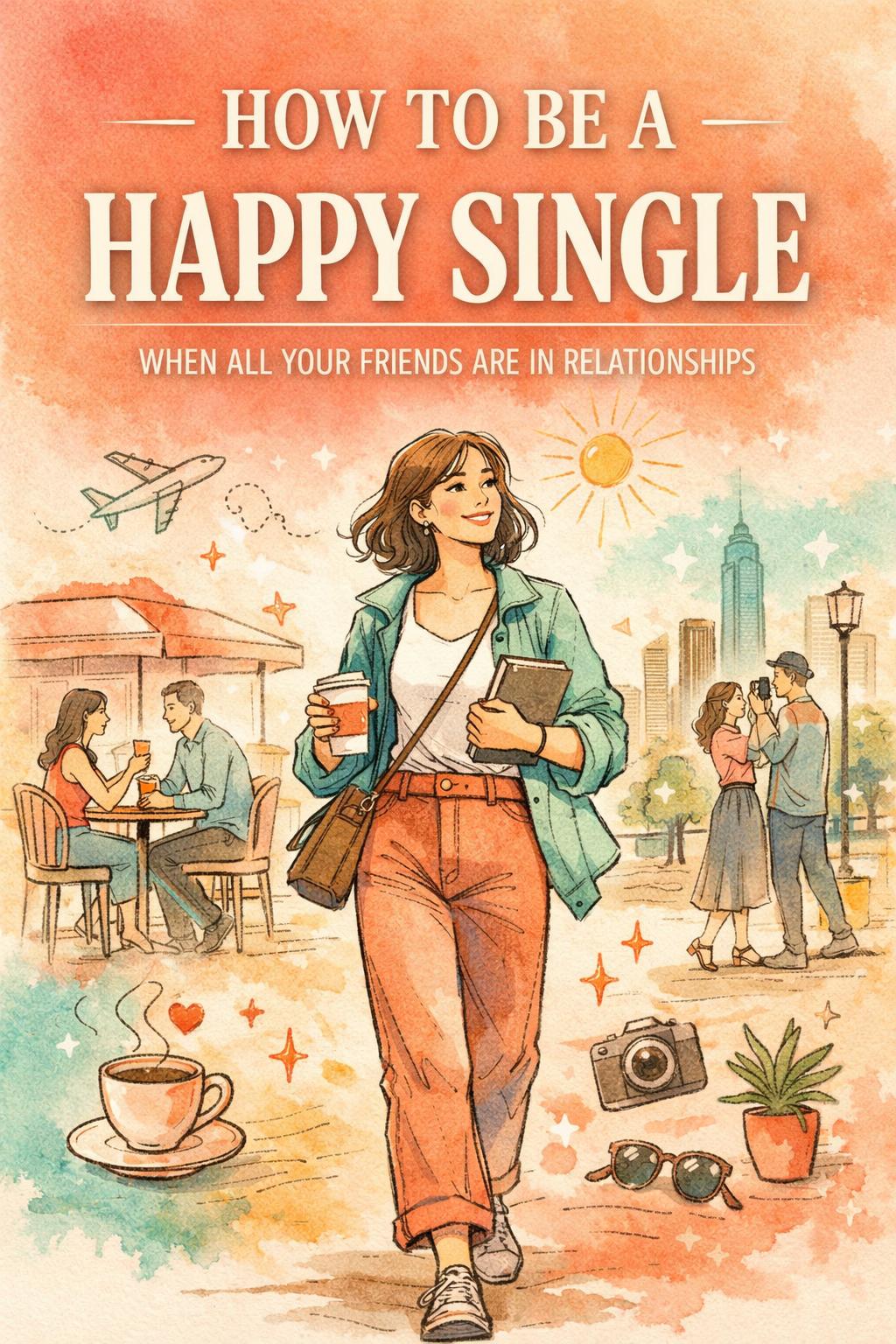
How to Be a Happy Single When All Your Friends Are in Relationships Leave a comment
Watching your friends pair off while you’re still single can make you feel left out. You might scroll through social media and see couples everywhere, making plans you’re not part of anymore. But being single doesn’t mean missing out on life, and being in a relationship doesn’t guarantee happiness.
The key to staying happy while single is building a full life through strong friendships, personal goals, and self-care. Psychologists have found many benefits to being single, and you can enjoy this time even when everyone around you seems to be coupling up. Your happiness doesn’t depend on your relationship status.
This guide will show you practical ways to feel good about being single. You’ll learn how to stay connected with your coupled friends, find new interests, and appreciate the freedom you have right now.
Key Takeaways
- Your worth and happiness come from within, not from having a partner
- Strong relationships with friends and family provide the emotional support you need to thrive while single
- Focusing on your own goals and interests helps you build a fulfilling life on your own terms
Understanding Self-Worth
Your value doesn’t change based on your relationship status, and recognizing this truth helps you build a fulfilling life whether you’re single or coupled. Self-worth comes from within and stays steady regardless of external circumstances.
Embracing Your Unique Journey
Your life path is yours alone, and comparing your timeline to others creates unnecessary stress. Some people meet partners early in life, while others find meaningful relationships later or choose to remain single.
Being single gives you time to discover who you are and what matters most to you. You can explore hobbies, travel on your own schedule, and make decisions without needing to consider another person’s preferences.
Strong relationships with friends and family are valuable and help strengthen your sense of self-worth. These connections provide support and companionship that enrich your life.
Think about what brings you joy and fulfillment. Your goals might include advancing your career, learning new skills, or deepening friendships. Each of these pursuits adds meaning to your life.
Letting Go of Comparison
Happy single people focus on their own path without measuring themselves against friends in relationships. Everyone’s journey follows different timing and circumstances.
Spending time with coupled friends can trigger feelings of missing out, but you can change this response. When you notice yourself comparing, redirect your attention to what’s going well in your life.
Remember that social media shows highlight reels, not the full picture of anyone’s relationship. Every couple faces challenges that aren’t visible from the outside. Your single life has advantages that people in relationships might envy, like freedom and independence.
Building Inner Confidence
Inner confidence grows when you take care of yourself and pursue activities that matter to you. Start by identifying your strengths and achievements, no matter how small they seem.
Practicing self-care and nurturing platonic relationships helps you get the most out of single life. Self-care includes physical activities like exercise, mental practices like journaling, and social connections with people you trust.
Set personal goals that excite you. These might include:
- Learning a new language or instrument
- Training for a race or fitness goal
- Taking a class in something you’ve always wanted to try
- Volunteering for a cause you care about
Each goal you achieve proves to yourself that you’re capable and valuable. This builds confidence that comes from your own actions, not from validation from a romantic partner.
Nurturing Strong Social Connections
Building deep friendships and finding your people through shared activities can fill your life with meaning and support. These connections often provide the emotional support and companionship that many assume only comes from romantic relationships.
Deepening Friendships Outside of Romance
Strong friendships play a bigger role in the lives of single people compared to those in romantic relationships. You can strengthen these bonds by showing up consistently for the people who matter to you.
Schedule regular one-on-one time with friends instead of only seeing them in groups. This creates space for deeper conversations and builds trust over time.
Share your real feelings and struggles with trusted friends. When you open up about what’s happening in your life, you invite others to do the same.
Ask thoughtful questions about their lives and remember the details they share. Following up on things they’ve mentioned shows you truly care about them as people.
Small acts can make a real difference in building stronger connections. Send a text to check in, offer help when they’re going through something tough, or celebrate their wins like you would want someone to celebrate yours.
Creating Community Through Shared Interests
Join clubs, classes, or groups centered around activities you enjoy or want to try. Book clubs, hiking groups, cooking classes, and sports leagues naturally bring together people with common interests.
Volunteer for causes that matter to you. Working alongside others toward a shared goal creates bonds while giving your time purpose and meaning.
Attend regular meetups or events in your area. Showing up to the same place repeatedly helps you become a familiar face and build friendships over time.
Start your own gathering if you can’t find what you’re looking for. Host a monthly dinner party, organize a game night, or create a group chat for people who want to explore your city together.
Exploring New Passions and Hobbies
Being single gives you the freedom to dive into activities that genuinely interest you without compromise. This time lets you build skills, meet new people, and create a life that feels fulfilling on your own terms.
Trying Activities You’ve Always Wanted
Make a list of activities you’ve put off because of time, money, or hesitation. Now is the perfect moment to sign up for that pottery class, learn a new language, or try rock climbing.
Start with one activity at a time to avoid feeling overwhelmed. Many community centers and local organizations offer beginner classes at low costs. You can also find free tutorials online for skills like cooking, photography, or playing an instrument.
When you pursue personal passions, you create opportunities to discover what brings you joy. These experiences help you build confidence and give you interesting stories to share. You might even find a new community of people who share your interests.
Don’t worry about being perfect when you start. The goal is to enjoy the process of learning something new. Try different activities until you find what resonates with you.
Setting Personal Challenges
Personal challenges give you clear goals to work toward and a sense of accomplishment when you complete them. Pick challenges that push you slightly outside your comfort zone but remain achievable.
You could train for a 5K run, commit to reading one book per week, or learn to cook 20 new recipes. Physical challenges like hiking a difficult trail or completing a fitness program can boost your mood and energy levels. Mental challenges like learning chess or studying a complex topic keep your mind sharp.
Track your progress in a journal or app to see how far you’ve come. Breaking larger goals into smaller steps makes them less intimidating. Celebrate each milestone along the way, whether that means treating yourself to something special or simply acknowledging your hard work.
These challenges prove to yourself that you can accomplish difficult things independently. That confidence carries over into other areas of your life.
Engaging in Creative Projects
Creative projects let you express yourself and produce something tangible. You don’t need artistic talent to benefit from creative work.
Start a blog about topics you care about, create a photo album of your neighborhood, or design your own furniture. Pursuing hobbies brings joy that comes from doing something purely for yourself. Gardening, crafting, writing fiction, or making music all count as creative outlets.
Set aside dedicated time each week for your creative work. Even 30 minutes can make a difference. Your project doesn’t need to be perfect or impress anyone else.
The process of creating helps you understand yourself better. You might discover hidden talents or develop new ways of thinking about problems. These projects also give you a productive way to spend time that might otherwise feel empty.
Prioritizing Emotional Well-Being
Taking care of your mental and emotional health becomes even more important when you’re navigating single life while your friends are coupled up. Building inner strength and finding the right support can help you feel content and confident on your own path.
Developing a Healthy Mindset
Your thoughts shape how you feel about being single. Instead of viewing your relationship status as something that needs fixing, try to see it as a valuable time for growth and self-discovery.
Challenge negative thoughts when they pop up. If you catch yourself thinking “I’m the only one alone,” replace it with “I have freedom to focus on my goals right now.” This shift helps you recognize the real benefits of your situation.
Pay attention to how you talk to yourself. Would you speak to a friend the way you speak to yourself? Treat yourself with the same kindness you’d offer someone you care about.
Avoid comparing your life to your friends’ relationships. Social media often shows just the highlight reel, not the full picture. What looks perfect on the outside might have challenges you don’t see.
Set boundaries around relationship talk if it bothers you. It’s okay to tell friends you’d rather discuss other topics sometimes.
Practicing Gratitude Daily
Gratitude shifts your focus from what’s missing to what’s already good in your life. Friendship satisfaction boosts happiness, emotional health, and life satisfaction in singles.
Start each morning by writing down three things you appreciate. These can be simple, like a good cup of coffee or a text from a friend. The practice trains your brain to notice positive aspects of your day.
Keep a gratitude journal specifically for your single life. Write about the freedom to make your own choices, pursue hobbies, or spend time however you want. Unlike your friends who need to consider their partner’s schedule and preferences, you get to be spontaneous.
Notice small moments throughout your day that bring joy. Maybe it’s sleeping in the middle of the bed or choosing what to watch without compromise.
Seeking Support When Needed
You don’t have to handle difficult emotions alone. Therapy can be a tool for growth, healing, and discovering what a thriving life looks like for you.
A therapist can help you work through feelings of loneliness or frustration. They offer a safe space to explore your emotions without judgment. Many people find that talking to a professional helps them understand their attachment style and what they really want from life.
Build a support network beyond romantic relationships. Strong connections with friends, family, and community provide emotional support and belonging. These relationships matter just as much as romantic ones.
Join groups or activities where you can meet others who share your interests. Look for single-focused meetups or hobby groups in your area. Connecting with other singles reminds you that you’re not alone in your experience.
Don’t hesitate to reach out when you’re struggling. Call a friend, join an online community, or schedule a therapy session. Asking for help is a sign of strength, not weakness.
Celebrating Independence
Being single gives you unique freedom to design your life exactly how you want it. You can explore new interests and create happiness on your own terms.
Enjoying Solo Adventures
Solo adventures let you discover what truly makes you happy without compromise. You can travel wherever you want, eat at any restaurant that interests you, or spend your weekend hiking without checking someone else’s schedule.
Start small if solo outings feel uncomfortable at first. Visit a coffee shop alone with a good book. Take yourself to a movie you’ve been wanting to see. Try that new restaurant downtown on a Tuesday evening.
Benefits of going solo:
- You set your own pace and schedule
- You can change plans anytime without discussion
- You meet new people more easily when alone
- You learn what you genuinely enjoy
Plan bigger adventures as you grow comfortable. Book a weekend trip to a nearby city. Sign up for a cooking class or pottery workshop. Join a hiking group or sports league where you’ll meet people with similar interests.
These experiences help you build confidence and self-reliance. You prove to yourself that you don’t need a partner to have fun or try new things.
Cultivating Daily Joyful Moments
Being independent means appreciating yourself while maintaining your friendships, regardless of relationship status. Small daily pleasures add up to genuine contentment.
Create a morning routine that makes you happy. Brew your favorite coffee, listen to music you love, or spend ten minutes reading before work. These moments belong entirely to you.
Simple ways to find daily joy:
- Cook your favorite meal without considering anyone else’s preferences
- Dance in your living room to songs you love
- Spend an hour on a hobby you’re passionate about
- Decorate your space exactly how you like it
Notice the small freedoms your single life offers. You control the TV remote, choose your own bedtime, and never compromise on weekend plans. Your home reflects your taste alone.
Building these joyful moments into your routine creates lasting happiness that doesn’t depend on relationship status.
Final Thoughts About Enjoying Being Single
Being single while your friends are coupled up doesn’t mean something is wrong with you. It’s simply a different phase of life that comes with its own set of benefits and opportunities.
Remember that being single offers unique opportunities for self-discovery and personal growth. You have the freedom to make decisions without considering anyone else’s schedule or preferences. You can travel when you want, change careers, or move to a new city without having to coordinate with a partner.
Psychologists have found many benefits to being single that are worth appreciating. You get to build stronger friendships, focus on your goals, and really figure out who you are as a person.
It’s also perfectly normal to hold two ideas at once: enjoying your single life while still wanting a partner eventually. These feelings don’t cancel each other out.
Your happiness doesn’t depend on your relationship status. It comes from the connections you build, the goals you pursue, and how you treat yourself day to day.
Focus on what you can control:
- Building quality friendships
- Working toward personal goals
- Trying new activities
- Taking care of your mental and physical health
- Creating a life you genuinely enjoy
Stop adding qualifiers like “for now” or “but I’m working on it” when you tell people you’re single. Your current relationship status is valid exactly as it is.