The Rock, Pebbles, and Sand Analogy for Time Management Leave a comment
Do you ever feel busy all day but still end up wondering if you actually worked on the things that matter most?
It’s easy to get caught up in small tasks, distractions, and endless to-do lists while the truly important goals keep getting pushed aside. Before long, your time and energy are filled with things that feel urgent but are not really meaningful.
That’s exactly why the “rocks, pebbles, and sand” story has become such a powerful lesson in time management and prioritization.
This simple analogy offers an eye-opening reminder that if you don’t make space for your biggest priorities first, the smaller things in life will quickly consume all your time. It’s a valuable lesson for work, relationships, personal growth, and everyday decision-making.
In this article, we’ll break down the rock, pebbles, and sand story and explore the important life lessons you can apply to your own schedule and priorities.
And if you’d like extra tools to better understand your goals, values, and priorities, be sure to grab the free Self-Discovery Self-Reflection Worksheets at the end of this post.
If you prefer to watch instead of read, check the video version of the Rock, Pebbles, and Sand story below:
The Rock, Pebbles, and Sand in a Jar Story
Here is a quick background on the rock, pebbles, and sand in a jar story
(This story appears in many forms, some even incorporating a fourth element of water. However, its original source is unknown. So consider the following to be a metaphor instead of an actual person who said the following.)
A philosophy professor once stood up before his class with a large empty mayonnaise jar. He filled the jar to the top with large rocks and asked his students if the jar was full.
The students said that yes, the jar was indeed full.
He then added small pebbles to the jar, and gave the jar a bit of a shake so the pebbles could disperse themselves among the larger rocks. Then he asked again, “Is the jar full now?”
The students agreed that the jar was still full.
The professor then poured sand into the jar to fill up any remaining empty space. The students then agreed that the jar was completely full.
The professor went on to explain that the jar represents everything that is in one’s life, which we’ll explain in the next section…
Is the Jar Full? A Breakdown on This Story
The rocks are equivalent to the most important projects and things you have going on, such as spending time with your family and maintaining proper health.
This means that if the pebbles and the sand were lost, the jar would still be full and your life would still have meaning.
(If you’d like to learn more about how to figure out what’s important in your life, read this article on 137 life lessons.)
The pebbles represent the things in your life that matter, but that you could live without.
The pebbles are certainly things that give your life meaning (such as your job, house, hobbies, and friendships), but they are not critical for you to have a meaningful life. These things often come and go, and are not permanent or essential to your overall well-being.
Finally, the sand represents the remaining filler things in your life, and material possessions.
This could be small things such as watching television, browsing through your favorite social media site, or running errands.
These things don’t mean much to your life as a whole, and are likely only done to waste time or get small tasks accomplished.
What Are Your Rocks in Life?
So what’s the big lesson with the rock, pebbles, and sand in a jar story?
The metaphor here is that if you start with putting sand into the jar, you will not have room for rocks or pebbles.
This holds true with the things you let into your life. If you spend all of your time on the small and insignificant things, you will run out of room for the things that are actually important.
In order to have a more effective and efficient life, pay attention to the “rocks,” because they are critical to your long-term well-being.
While you can always find time to work or do chores, it is important to manage the things that really matter first. The rocks are your priorities, while the other things in your life are represented by pebbles and sand.
In order to stay productive and efficient in your personal and professional life, it’s best to have a maximum of five rocks in the jar at any given time.
These rocks may represent a project you want to accomplish, spending time with your loved ones, spending time with your faith, focusing on your education, or maybe mentoring other people. Your top five big rocks need to go into the jar first or else they will never get in at all.
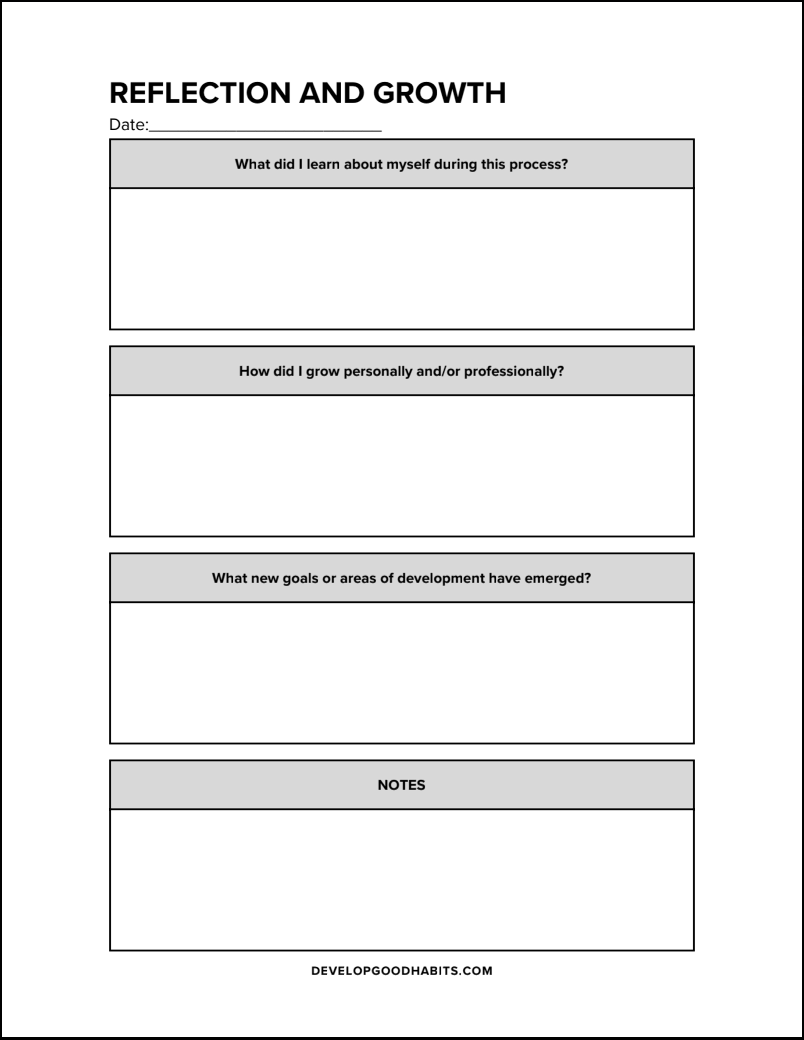
Free Download: Self-Discovery Self-Reflection Worksheets
These Self-Discovery Self-Reflection Worksheets are designed to help you better understand your goals, values, habits, and priorities so you can make more intentional decisions in your daily life. They’re a simple yet powerful resource for personal growth and self-awareness.
Download your free worksheets and start gaining more clarity about what matters most to you.
(The link opens up a Google Drive folder where you can get the PDF download in a variety of sizes: A4, A5, and US Letter.)
Final Thoughts on the Rock, Pebbles, and Sand Story
If you are able to identify the important things in your life ahead of time and set aside the time you need to work on them, then in the long run it is okay to procrastinate a bit on the “pebbles” or the other projects that are not as important.
The jar is still full with five rocks in it, so that is where your focus should lie in order to continue to live a full, happy life without over-obligating yourself. If you solve the big issues first by putting the rocks in the jar first, the small issues can still fall into place. However, the reverse is not true.
Finally, if you’d like to learn more about how to make effective decisions on what’s actually important in your life, then I recommend checking out these articles on our website:
Finally, if you want to level up your productivity and time management skills, then watch this free video about the 9 productivity habits you can build at work.